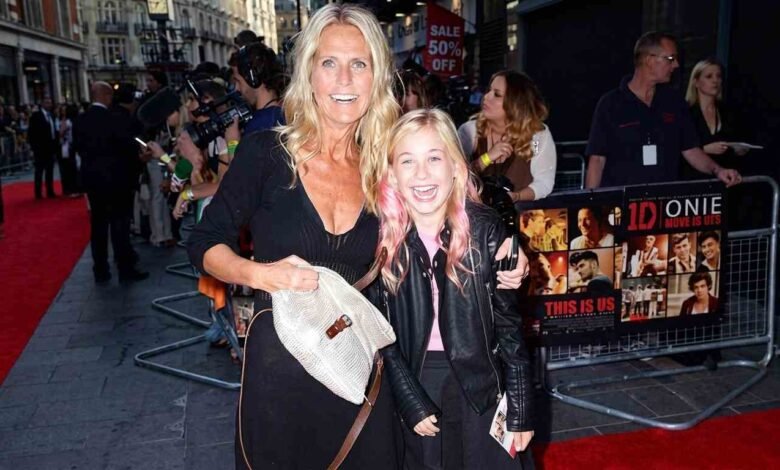
For two decades, Ulrika Jonsson was not merely a television presenter. She was a national commodity, traded on the front pages of the British press as a reliably chaotic archetype.
As of mid-2026, Ulrika Jonsson has shifted her public image from a 1990s television personality to a vocal advocate for midlife health. By publicly discussing her milestone of two years without alcohol and detailing her cosmetic choices, she has successfully taken control of a narrative previously dominated by others.
To survive the peak era of British tabloid culture required a thick skin. To reinvent oneself in the aftermath requires a very specific kind of ruthlessness. For those who achieved fame in the nineteen-nineties, the transition into the modern digital economy is often awkward. Many fade into quiet retirement, while a few cling to legacy formats. Jonsson chose a third route. She dismantled the machinery that once exploited her by adopting a strategy of absolute, unfiltered disclosure.
The Architecture of Public Scrutiny
The British press at the turn of the millennium built an entire economy on female celebrities who stepped out of line. Jonsson provided endless material. Whether presenting early-morning weather segments or fronting major Saturday night entertainment formats like Gladiators, her professional output was routinely overshadowed by paparazzi surveillance.
She rarely had the luxury of announcing her own news.
During her tenure on Shooting Stars, her personal life was treated as public property. Every alleged indiscretion became a national talking point. The media environment of that era did not allow women to be complicated; they were categorised strictly as victims or villains. Jonsson occupied both roles at various points, generating immense revenue for newspaper proprietors while seeing her own reputation battered in the process.
That dynamic has entirely inverted. Today, if you want to know about her struggles with alcohol or her cosmetic surgery, you do not need to buy a red-top newspaper. You just need to listen to her. By publishing the most uncomfortable details of her life before anyone else can monetise them, she has rendered the paparazzi obsolete.
Sobriety as an Instrument of Control
The narrative surrounding Ulrika Jonsson’s sobriety reached a significant milestone in June 2026, when she marked twenty-four months without alcohol. This was not a quiet, private achievement shared only with close confidants. She used the moment to cement a public conversation she had initiated a year earlier.
In a searing open letter published in The Times, she described waking up after a routine day of drinking with her liver and brain pickled in equal measure. She articulated the specific sensation of being wrapped in a blanket of shame. It was a raw, unvarnished admission that deliberately stripped away the glamour associated with media lifestyles.
During a subsequent appearance on Spencer Matthews’ podcast, Untapped, she elaborated on the mechanics of her dependency. Drink had become a companion, acting as a highly effective coping mechanism for a deeply entrenched personal issue that refused to resolve itself. She admitted to drinking alone and experiencing frequent blackouts.
“I just didn’t feel like I was the sort of person who would lose control,” she told Matthews.
The Functioning Illusion
The most striking element of her advocacy is her willingness to dismantle the myth of the functioning alcoholic. The popular imagination often pictures addiction as visible chaos. Jonsson subverted that expectation entirely.
She had always been the primary breadwinner for her family. She also kept her domestic environment utterly immaculate. That polished exterior allowed the dependency to thrive entirely out of sight. Because she met her professional deadlines and kept the household running, nobody suspected she was drinking herself into oblivion once the doors were closed.
By deconstructing this specific illusion, Jonsson is weaponising her own vulnerability. Much like how Carly Simon turned a health disclosure into a controlled multi-outlet statement, the presenter is setting the terms of her own public exposure. She is educating a demographic of midlife women who might recognise their own hidden habits in her testimony.
The £17,000 Refusal to Apologise
This exact philosophy of aggressive transparency extends to her physical appearance. In April 2026, beauty publications including Get the Gloss analysed her extensive cosmetic transformation. Most broadcasters in their late fifties deflect questions about ageing with vague references to drinking water and finding inner peace.
Jonsson documented the receipts.
She openly discussed undergoing a six-month intensive regimen at Define Clinic. She admitted that the physical realities of ageing had hit her incredibly hard, prompting a decision to simply buy her way out of the slump. It is a rare admission in an industry that demands eternal youth but heavily punishes women for seeking out the medical procedures required to maintain it.
She spent the money and refused to feign natural perfection.
Rewriting the Midlife Playbook
This level of financial and medical candour is disruptive. It breaks the unspoken rule of television glamour, which dictates that beauty must appear effortless. By breaking down the financial cost of her face, she aligns herself with a newer, more honest brand of public figure.
She secures her own relevance by authoring these disclosures directly, just as Madison Beer reframed her own career around self-authored announcements rather than leaked stories. Jonsson is no longer a subject waiting to be exposed by a long-lens camera.
Confirmed versus Assumed
The public record establishes Jonsson as a 58-year-old broadcaster who sought treatment for alcohol dependency and logged her midlife health choices without apology. The assumed reading among industry observers is that this radical transparency serves as a calculated pitch for a primetime television comeback. That interpretation misreads her current trajectory entirely. Her recent media presence operates outside the traditional presenter circuit. She is authoring her own narrative because the alternative is letting the press resume control of it, a mistake she has no intention of repeating.
FAQ
Why did Ulrika Jonsson stop drinking?
She identified that alcohol had transitioned from a social activity to a solitary coping mechanism for personal stress. She acknowledged experiencing memory loss and realised that maintaining an outwardly perfect life was masking a severe dependency.
What has she said about her cosmetic procedures?
In early 2026, she spoke candidly about an intensive skin treatment programme that cost thousands of pounds. She rejected the standard celebrity pretence of effortless ageing, confirming she sought professional cosmetic intervention because she felt she had aged poorly.
Does she still work in television?
While she occasionally appears on panel shows and reality formats, her primary output has shifted toward writing and health advocacy. This pivot mirrors Julia Bradbury’s transition from broadcaster to preventative-health advocate in recent years.
How does she view her tabloid history today?
She views those decades as a period where she lacked agency over her own story. Her current strategy of extreme candour is a direct response to that era, ensuring no newspaper can expose a secret she has already willingly shared.
Sources
-
Woman & Home — “‘Drink became my friend’ – Ulrika Jonsson reveals journey to sobriety in new podcast episode” — reported July 2025
-
HELLO! Magazine — “Ulrika Jonsson marks two years sober after ‘dark days burdened by drink’ in her 50s” — reported June 2026
-
Get the Gloss — “The secrets behind Ulrika Jonsson’s £17k glow-up” — reported April 2026
-
Wikipedia — “Ulrika Jonsson” — reported 2026