For the contemporary television anchor, neutrality is no longer a shield. It is a target.
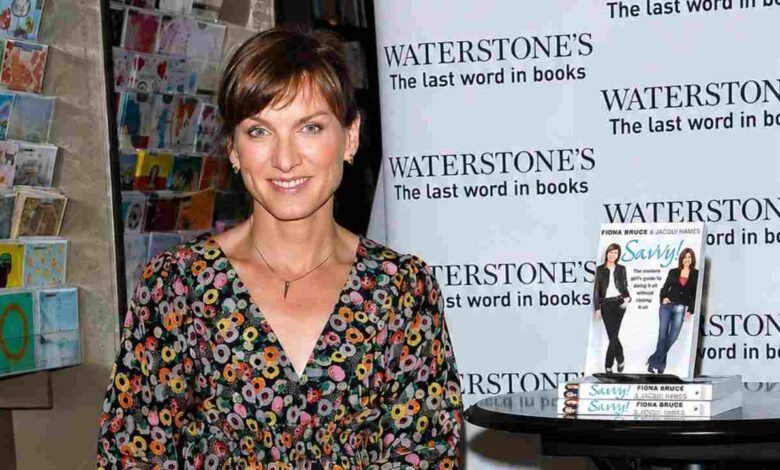
Fiona Bruce occupies a distinctly paradoxical space within the British broadcasting ecosystem. On Thursday evenings, she referees the fractured arena of live political debate. By Sunday, she is appraising ceramic vases on rolling country estate lawns. This dual identity makes her an anomaly. She is simultaneously the face of the corporation’s hardest news edge and its softest heritage comfort.
Watching her manage this divide offers a masterclass in narrative control. Unlike contemporaries who built a multi-platform career outside the corporation, Bruce remains deeply tethered to the BBC’s internal architecture. Her trajectory reveals exactly how Britain manufactures national treasures in an era where universal approval is practically impossible.
Thursday Night Combat Versus Sunday Evening Comfort
Fiona Bruce is a prominent British journalist and television presenter who uniquely bridges the BBC’s hard news and heritage output. She has anchored the political debate programme Question Time since 2019 while simultaneously fronting Antiques Roadshow, making her one of the highest-paid and most scrutinised figures in UK public broadcasting.
That level of visibility invites a highly specific type of pressure. The Fiona Bruce BBC career rests on an architectural tension between refereeing a hostile electorate and providing weekend television solace. The former requires aggressive fact-checking and sharp interruptions. The latter demands warmth, deference, and a gentle curiosity about family heirlooms.
Broadcasters typically choose one lane. Moving between them within a single programming week requires an emotional gear shift that very few presenters attempt.
How Impartiality Became a Hostile Environment
“I am not there to offer an opinion.”
Bruce has frequently articulated variations of this sentiment regarding her political anchoring, according to archived press statements. Yet the reality of chairing a live audience forces rapid, unscripted editorial judgments. Impartiality on paper is a static concept. Impartiality in a municipal town hall with angry voters is a live combat sport.
Every interruption, every follow-up question, and every attempt to cut off a rambling panellist is forensically examined by partisan viewers on social media. If she interrupts a Conservative minister, the political right claims bias. If she allows a left-wing panellist to speak uninterrupted, the opposite accusation lands. The presenter cannot win. She can only survive the hour.
The Architecture of Damage Control
This high-wire act inevitably sustains collateral damage. When a presenter sits at the nexus of live political friction, they occasionally become the story themselves.
During a March 2023 broadcast, Bruce contextualised allegations regarding a public figure’s past behaviour. This conversational pivot reportedly prompted immediate backlash from domestic abuse charities, who felt the phrasing minimised the severity of the claims. According to reports in The Guardian and The Telegraph at the time, the fallout was swift.
Bruce stepped back from her ambassadorial role with the charity Refuge shortly after. Public statements released on her behalf indicated she did not wish to let the controversy distract from the organisation’s core work.
Watching a high-profile figure manage a public downfall or intense scrutiny requires a specific kind of discretion. Bruce did not embark on a media tour to defend herself. She released a carefully calibrated statement, absorbed the criticism, and returned to the anchor desk.
Why Silence is an Editorial Strategy
The handling of the Refuge incident highlights a broader survival mechanism for heritage broadcasters. Apologise quickly, step away from the immediate flashpoint, and allow the news cycle to churn forward.
Her resilience stems from sheer institutional grounding. Bruce has read the BBC News at Ten, hosted Crimewatch, and anchored royal coverage. She is woven into the fabric of the national broadcaster so thoroughly that extracting her would require unpicking decades of television history.
The Era of the Indispensable Anchor
The television landscape is fracturing. Audiences are migrating to on-demand platforms, and the traditional live broadcast is losing its grip on the cultural imagination. In this environment, familiarity is a highly monetisable asset.
The BBC needs Bruce as much as she needs the platform. She provides a rare connective tissue between the older, license-fee-paying demographic and the sharp, combative clips generated for digital platforms. She anchors the heritage while surviving the crossfire.
Confirmed vs. Assumed This piece separates institutional fact from public interpretation, based on publicly reported information available at time of writing, not independently re-verified this session. Salary bands, broadcasting timelines, and her resignation from the Refuge ambassadorship are matters of public record. The strategic intent behind her media silence, and the perceived tension between her two flagship programmes, reflect editorial interpretation of her public trajectory rather than claims Bruce has personally authenticated.
Frequently Asked Questions
How long has Fiona Bruce presented Question Time? She took over the chair in January 2019, succeeding David Dimbleby. Her appointment marked a shift in the programme’s tone, trading Dimbleby’s patrician authority for a sharper, more journalistic interrogation style that regularly puts her in direct conflict with panellists.
Did Fiona Bruce start her career as a newsreader? Her early television profile was built entirely on hard news. She joined the BBC as a researcher on Panorama in the late 1980s before becoming the first female newsreader on the BBC News at Ten, establishing the authoritative gravitas that eventually allowed her to transition into lighter factual programming.
Why did she step away from her role at Refuge? Following a controversial exchange on Question Time in 2023 regarding allegations of domestic violence against a public figure, she faced significant online backlash. She relinquished her ambassadorial role to prevent the media storm from overshadowing the charity’s operational objectives, according to statements released at the time.
What is her standing within the BBC’s top earners? Annual corporation reports consistently place her among the highest-paid on-air talent. This salary reflects her unique utility player status, anchoring both a flagship political property and a premier Sunday entertainment format, effectively doing the heavy lifting for two entirely distinct viewing demographics.
Sources
-
The Guardian — “Fiona Bruce steps back from Refuge role after Question Time row” — reported March 2023
-
BBC News / Radio Times — “BBC publishes highest-paid stars list” — reported July 2023
-
The Independent / The Telegraph — “Fiona Bruce accused of trivialising domestic abuse on Question Time” — reported March 2023
-
The Guardian / BBC Press Office — “Fiona Bruce to take over Question Time” — reported December 2018