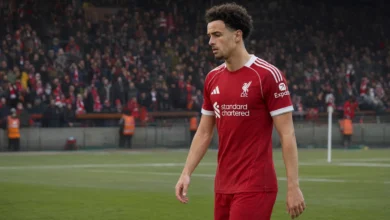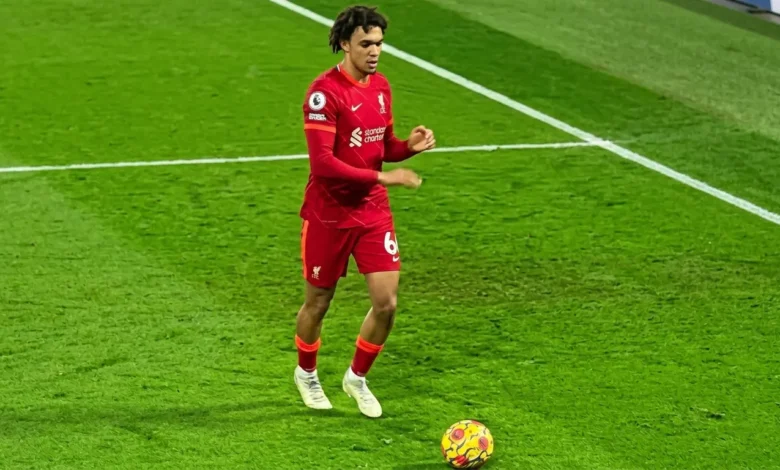
When Trent Alexander-Arnold walked out of Melwood to finalise his ten-million-euro early release to Real Madrid in May 2025, he was not merely changing shirts. He was executing football’s ultimate ideological experiment. For nearly a decade at Liverpool, the West Derby native operated as a tactical sovereign. He was a full-back who acted as an architect, re-engineering the geometry of modern defending under Jürgen Klopp and Arne Slot. Yet trading the bespoke structural security of Merseyside for the unforgiving glamour of the Santiago Bernabéu meant stepping into an environment where individual brilliance is demanded and system protection is strictly non-existent.
The move to the Spanish capital promised the final validation of his status as a generational playmaker. Instead, his debut season in La Liga laid bare the delicate boundary between tactical freedom and defensive exposure. Surrounded by Galácticos, the Englishman found that the luxury of having an entire system engineered around his specific passing radius vanished
The Architecture of a Scouse Departure
For years, Anfield presented a unique environment where Alexander-Arnold’s defensive limitations were treated as a necessary tax on his creative genius. Liverpool built a machine designed to cover his forward excursions. Jordan Henderson, Fabinho, and later Ibrahima Konaté were tasked with patrolling the vast expanses left behind his right-sided raids. His whipping diagonal deliveries and set-piece mastery yielded nine major trophies, including two Premier League titles and a Champions League crown, alongside 354 appearances in the famous red shirt.
Yet the temptation of Spain was rooted in something beyond silver polish. Alexander-Arnold sought the global cultural weight that only Real Madrid confers upon its stars. Leaving boyhood loyalty behind is rarely clean, and Liverpool supporters watched his contract tick down toward its June 2025 expiration with growing anxiety. When Real Madrid agreed to pay a nominal fee to secure his services a month early for the 2025 FIFA Club World Cup, the departure felt like a clinical corporate extraction rather than a warm emotional farewell.
His arrival in Madrid was trumpeted as a masterstroke of recruitment. Florentino Pérez had secured the premier creator in European football to feed a frontline boasting Kylian Mbappé and Vinícius Júnior. On paper, the diagonal passes over low blocks looked irresistible.
Featured Snippet Answer Block
Trent Alexander-Arnold joined Real Madrid from Liverpool in June 2025 on a six-year contract through 2031. Madrid paid an estimated ten million euros to release him early for the FIFA Club World Cup, ending his nine-trophy, 354-game career at Anfield to seek new global challenges.
The Bernabéu’s Unforgiving Crucible
Spain rarely grants grace periods to high-profile arrivals. Unlike the structured pressing routines of English football, La Liga demands positional discipline from its defenders while expecting forwards to produce unscripted magic. In Madrid, Alexander-Arnold encountered a tactical culture that prioritised individual duels over collective coverage.

Injuries disrupted his initial adaptation, limiting him to 21 La Liga appearances and four assists across his debut campaign. Without a dedicated midfielder shifting into the right channel to cover his advances, Spanish wingers routinely isolated him in wide spaces. The media scrutiny in Madrid proved relentless. Local commentators who had once praised his vision quickly focused on his positioning during defensive transitions.
By May 2026, reports surfaced indicating Spanish management was already evaluating alternative options at right-back. The contrast with his statutory status in Liverpool was stark. At Anfield, his rare off-days were defended as creative risk-taking; in Madrid, they were catalogued as tactical liabilities.
Why Did Trent Alexander-Arnold Leave Liverpool for Real Madrid?
The driving force behind his departure was a desire to transcend the traditional boundary of the English full-back. Having achieved every domestic and continental honour available in England by age twenty-six, Alexander-Arnold viewed Madrid as the required platform to contend for individual accolades like the Ballon d’Or.
He wanted to prove his footballing intelligence could translate outside the comfortable infrastructure of his hometown club. However, the move also exposed the vulnerability inherent in leaving an ecosystem built entirely around one’s strengths.
The International Cold Shoulder
The domestic friction in Spain yielded swift consequences on the international stage. When Thomas Tuchel named his England squad for the 2026 World Cup in North America, Alexander-Arnold’s name was conspicuously absent.

Tuchel’s decision to leave out one of England’s most decorated modern talents sent shockwaves through the sport. The national team manager favoured defensive stability and positional reliability over specialized passing ability. For a player who had spent years trying to establish a permanent role in the national side under Gareth Southgate, the World Cup exclusion was a devastating reality check.
Watching his international teammates reach the latter stages in the United States while remaining at home underscored the cost of his Spanish transition. The narrative that his passing range could compensate for defensive concessions no longer convinced national team selectors operating in knockout tournament environments.
The Structural Reality of Individual Genius
Footballing culture often fetishises the romantic idea of the pure playmaker, yet elite modern sport remains fundamentally pragmatic. Alexander-Arnold’s trajectory illustrates the tension between individual expression and collective structure. When a player’s primary asset is so extraordinary that it redefines a position, their success relies almost entirely on the surrounding environment acknowledging and protecting that specific asymmetry.
His journey reflects a wider reality in top-tier European football: top clubs are increasingly reluctant to compromise structural balance for a single specialized talent unless the offensive output completely overpowers the defensive downside.
Confirmed vs. Assumed
The verified timeline confirms that Trent Alexander-Arnold signed a six-year contract with Real Madrid running until June 2031, with Liverpool receiving a buyout fee of approximately ten million euros in May 2025. His initial season yielded 30 total appearances across all competitions amid persistent muscle injuries, culminating in his omission from Thomas Tuchel’s 2026 England World Cup roster. While media coverage in Spain and the UK frequently characterises the move as a failure or speculates on a rapid return to the Premier League, such reports represent external commentary rather than official club intentions. Madrid’s public stance remains committed to developing his role within their long-term squad rotation.
Frequently Asked Questions
How many trophies did Trent Alexander-Arnold win at Liverpool?
During his senior career at Anfield between 2016 and 2025, he won nine major honours. These included the Premier League twice, the UEFA Champions League, the FA Cup, two League Cups, the FIFA Club World Cup, the UEFA Super Cup, and the Community Shield.
Why was Trent Alexander-Arnold left out of England’s 2026 World Cup squad?
England manager Thomas Tuchel opted for full-backs offering greater defensive consistency and tactical versatility in a four-man defence. Alexander-Arnold’s limited playing time and defensive struggles during his debut season in Spain ultimately led to his exclusion.
What was the transfer fee Real Madrid paid Liverpool in 2025?
Although his Liverpool contract was due to expire on 30 June 2025, Real Madrid agreed to pay a fee reported at ten million euros (roughly eight million pounds) to secure his registration on 1 June 2025, allowing him to participate in the FIFA Club World Cup.
Has Real Madrid put Trent Alexander-Arnold up for transfer after one season?
No official transfer listing has occurred. Although Spanish media outlets raised concerns over his defensive adaptation during the 2025–2026 season, he remains under contract with Real Madrid until 2031 and has publicly stated his determination to secure his place in the starting line-up.
Sources
- Real Madrid C.F. — “Official Announcement: Alexander-Arnold” — reported May 2025
- Sports Illustrated — “Real Madrid Sign Trent Alexander-Arnold, Club World Cup Status Confirmed” — reported May 2025
- Al Jazeera — “Real Madrid announce Alexander-Arnold signing from Liverpool” — reported May 2025
- Sports Chosun / Mirror — “Real Madrid Weighs Replacing Trent Alexander-Arnold After One Season” — reported May 2026
- BolaVIP — “Why isn’t Trent Alexander-Arnold playing in 2026 World Cup with England?” — reported June 2026