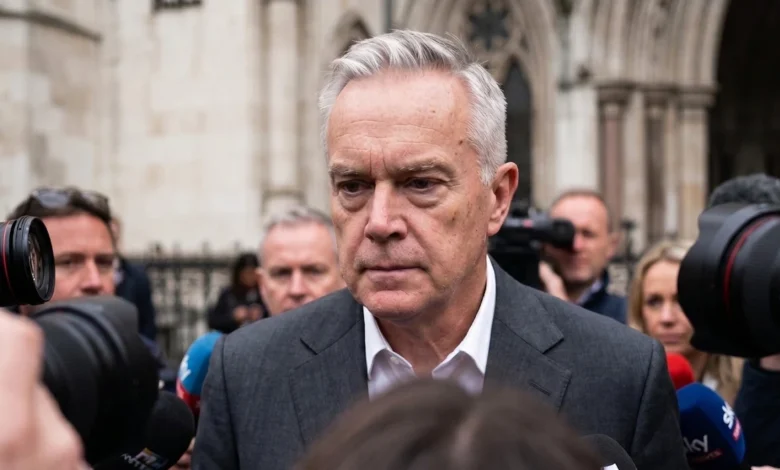
For two decades, his voice was the instrument the British establishment used to announce its most solemn moments. Elections, royal weddings, and the death of a monarch all arrived in living rooms carried by the same Welsh baritone. The Huw Edwards BBC scandal dismantled that legacy in a matter of months. Today, the corporation treats its former lead presenter not as a retired giant, but as a liability requiring total removal from the digital footprint.
The Huw Edwards BBC scandal reached its legal conclusion in late 2024 when the former newsreader pleaded guilty to three charges relating to making indecent images of children. Following his suspended sentence, the corporation initiated a rapid process of removing his historical broadcasts from public archives, reflecting a definitive corporate separation.
The Liability of the Father Figure
The corporation builds specific presenters into something resembling national furniture. They become shorthand for authority. When allegations first surfaced in a tabloid newspaper in 2023, the initial corporate response appeared hesitant. Executives navigated complex privacy laws while public speculation raged online. The eventual guilty plea at Westminster Magistrates’ Court forced a brutal and immediate pivot. According to extensive reporting by The Guardian in July 2024, the swiftness of the subsequent internal review demonstrated how quickly an institution will amputate a limb to save the body.
Reputations built over thirty years evaporate in an afternoon.
The transition from respected journalist to disgraced figure involved a rapid unwinding of commercial and social standing. Academic honours were revoked by universities. Commemorative plaques disappeared from public buildings. This is the reality of modern reputational collapse. The immense influence previously wielded on the Ten O’Clock News vanished the moment the police investigation concluded.
Why does a broadcaster delete its own history?
Removing a lead anchor from the archives creates a surreal viewing experience for historical events. Documentaries covering the Queen’s death now face a bizarre challenge. Producers must depict a generational event without showing the man who told the country it happened.

As highlighted by media analysts across the trade press, this strategy of retroactive deletion serves a dual purpose. It protects audiences from distress while legally distancing the corporate brand from the individual’s criminal convictions. Executives reportedly viewed the removal as a necessary protective measure rather than an editorial rewriting of history. The product is no longer objective news recording. The product is reputational risk management.
Such maneuvers reveal the inherent tension in building an entire news brand around a single personality. When a presenter serves as a case study in modern BBC impartiality during their peak career, their downfall compromises the very concept of that neutrality. The authority of the newsroom becomes inseparable from the hidden life of the newsreader.
The Economy of Institutional Trust
Financial fallout often trails closely behind reputational ruin. Following the guilty plea, corporate statements confirmed requests for the return of specific salary payments made during his suspension period. Employment law protects certain baseline rights, but the court of public opinion demands total financial severance. The broadcaster found itself balancing strict contractual obligations against immense political pressure to demonstrate punitive action.
The legal facts of the convictions and the subsequent archival removals are matters of public court and corporate record. The broader assumption that the broadcaster’s internal culture inherently protected him for decades remains fiercely debated. While critics point to a systemic failure to act on early whispers, the structural reality suggests a simpler corporate mechanism at play. Large institutions protect their most valuable assets until the exact moment those assets become toxic, at which point the loyalty abruptly reverses.
Frequently Asked Questions
Did Huw Edwards lose his pension after resigning?
Standard corporate policy dictates that pension pots accrued over a decades-long career remain legally protected even following a resignation under severe conditions. While the broadcaster demanded the return of specific salary payments made during his suspension, the underlying pension mechanisms operate under separate employment law protections.
What prompted the initial investigation into the presenter?
The timeline began with a series of allegations published by a national newspaper regarding payments for explicit images. This sustained media pressure forced an internal corporate review, which subsequently ran parallel to a formal police investigation culminating in criminal charges.
How do streaming platforms handle his past documentaries?
Services like BBC iPlayer have actively removed factual programmes and historical series fronted by the former presenter. Where a series holds significant educational value, production teams face the complex task of re-editing episodes to remove his narration entirely.
Are there precedents for this level of media erasure?
British television networks have previously navigated similar archival purges following the criminal convictions of high-profile entertainment figures. However, applying this protocol to a lead news anchor presents a unique challenge given their central role in reporting objective national history.
Sources
- The Guardian — “Huw Edwards pleads guilty to making indecent images of children” — reported July 2024
- BBC News — “BBC asks Huw Edwards to return salary paid since arrest” — reported August 2024
- The Times — “How the BBC is erasing Huw Edwards from its archive” — reported August 2024
- Ofcom — “Broadcasting standards and institutional trust reports” — reported 2024